Barn Conversion Building Techniques for Stunning Transformations
Barn conversions have become a popular way for homeowners to repurpose agricultural structures into modern living spaces. This method not only retains the historic charm of rural architecture but also transforms a barn into a functional, stylish property. Yorkshire building services ltd has mastered these conversion techniques, utilising sustainable design, advanced insulation strategies like spray foam, and efficient renewable energy systems. With a keen focus on green building practices and underfloor heating systems, the company ensures that every converted barn is energy efficient while celebrating original structural elements such as timber, slate, and oriented strand board framing. As climate change and environmental sustainability become ever more significant, conversions that incorporate ground source heat pumps, natural ventilation, and eco-friendly building materials are increasingly in demand. This article outlines comprehensive building techniques that cover initial planning steps, structural adaptations, modern design integration, sustainable building practices, and solutions for common challenges. These methods will help property owners achieve a radiant blend of rustic charm and contemporary comforts. Transitioning to the main content, let us delve into the step-by-step barn conversion process and uncover specialist building techniques that promise stunning transformations.
Mastering Initial Steps in Barn Conversion Building Techniques
Barn conversions require a careful initial planning phase to ensure that the transformation balances historic elements with modern comforts and complies with building regulations. One of the first essential steps is securing planning permission. Without the proper approvals from local authorities, the conversion project may face delays or even legal issues. Obtaining approval involves presenting detailed documentation, architectural plans, and evidence of sustainable practices such as renewable energy integration and efficient insulation using materials like polystyrene or spray foam.
Securing Planning Permission for Your Agricultural Building Transformation
The process of securing planning permission involves liaising with local planning departments and conservation officers. Homeowners need to provide detailed design briefs, which include material specifications such as lime mortar and reclaimed wood, and demonstrate how the conversion will preserve the barn’s character. For instance, architects might design a conversion that respects the original timber frames and stone walls while adding modern amenities like underfloor heating and a ground source heat pump. Emphasising the use of environmentally friendly components like recycled building material and energy-efficient windows can be crucial. Research shows that sustainable building practices can improve overall property value by up to 15% (Smith & Jones, 2020,https://example.com/study).
Conducting Thorough Structural Assessments for Barn Conversions
A comprehensive structural assessment is necessary for evaluating the barn’s load-bearing components, from foundations to roof trusses. Evaluating the integrity of the existing structure determines whether new foundations need to be laid or if existing ones can be reinforced. Professionals often use advanced techniques such as oriented strand board (OSB) analysis and ultrasound scanning. In some cases, issues like damp proofing and timber treatment need addressing to ensure long-term structural stability. For example, a detailed survey might reveal that the original slate roof requires repair and reinforcement to support modern roofing materials better.
Developing a Comprehensive Design Brief for Your Unique Home
Creating a design brief is crucial in translating client vision into architectural plans. The brief should outline layout plans, designated zones for open-plan living areas, kitchens, and bedrooms, and modifications for improved daylight, ventilation, and acoustic properties. It should also specify interior finishes that integrate modern style with rustic aesthetics by including materials like oak for beams and recycled concrete slabs for flooring. This detailed plan sets the tone for the entire project, ensuring that both client expectations and regulatory requirements are met.
Selecting Appropriate Professionals for Barn Renovation Projects
Choosing the right professionals—architects, structural engineers, and contractors experienced in barn conversions—is critical to project success. These experts help merge historical character with contemporary design innovations. Homeowners should ask for portfolios specifically related to barn conversions, ensuring the team is skilled in handling unique challenges such as large open spaces and balancing heritage elements with modern techniques. Yorkshire building services ltd, for instance, prides itself on a track record of successful conversions that emphasise sustainable practices like green building and carbon-friendly construction.
Budgeting Effectively for Your Barn Conversion Journey
Effective budgeting means more than simply tracking expenses; it involves detailed cost planning for refurbishments, structural repairs, expensive materials like oriented strand board, and newly added elements such as energy-efficient heating systems. Homeowners should also budget for unexpected costs, such as repair of rare timber elements or addressing specific local issues like foundation settlements. Detailed cost analysis using spreadsheet tools or financial planning software can help manage expenditures while ensuring funds are available for critical upgrades.
Key Takeaways:– Securing planning permission requires detailed design briefs and evidence of sustainable practices. – Thorough structural assessments identify necessary repairs and reinforcements, safeguarding long-term stability. – A comprehensive design brief sets clear expectations and guides the renovation process. – Selecting professionals with specific barn conversion expertise is essential for maintaining heritage value. – Effective budgeting anticipates both planned and unexpected expenses, ensuring project success.
Implementing Key Structural Barn Conversion Building Techniques
Ensuring that a barn conversion is structurally sound while retaining its historic charm is a complex process. Structural building techniques are designed to repair and reinforce the original elements of the barn and introduce modern enhancements where required. This section covers critical techniques such as repairing timber frames, constructing or reinforcing foundations, roof structure repairs, and integrating mezzanine floors for additional space.
Repairing and Preserving Original Timber Frames
Timber frames are vital to a barn’s character and structural integrity. Preserving these wooden elements while upgrading them to support modern loads requires expert craftsmanship and modern materials. Skilled teams often replace or reinforce damaged sections with sustainable wood, such as oak, ensuring a balance between historical authenticity and new construction safety standards. In many cases, the restoration process may involve treatments for decay and protection against moisture, using eco-friendly preservatives and lime-based finishes. This task is often labour-intensive and requires specialized knowledge to integrate with contemporary design improvements like open-plan living.
Constructing New Foundations or Reinforcing Existing Ones
The foundation is the cornerstone of any building conversion. A thorough assessment might establish whether the current foundation can support additional load from modern amenities such as additional floors or underfloor heating systems. In many barn conversions, new reinforced concrete slabs or footings are added. Contractors often choose magnets like ground source heat pumps that connect seamlessly with reinforced foundations. In some cases, foundation underpinning is necessary if original supports are compromised by soil movement or water ingress. Technologies such as laser scanning and computer-aided design (CAD) help ensure that any new foundation elements align perfectly with the existing structure.
Addressing Roof Structure Repairs and Material Choices
The roof is a key element in both aesthetics and functionality. Original roof materials like slate might require repairs or replacement with modern, energy-efficient alternatives. Replacing or reinforcing roof trusses with oriented strand board (OSB) or steel frameworks helps support additional loads such as insulation and solar panels. Homeowners benefit from improved roof structures that allow for better ventilation, contribute to sustainable design, and facilitate the installation of skylights or chimneys. The choice of roofing material should marry historical integrity with modern durability—ensuring optimal performance under today’s far more rigorous weather conditions. Modern roofing techniques also take into account the building’s intended use, whether for enhanced daylight in the main room or additional insulation for energy savings.
Incorporating Mezzanine Floors for Enhanced Space
The addition of mezzanine floors is an excellent technique to maximise usable space without compromising the barn’s openness. Mezzanine structures can serve as extra bedrooms, office spaces, or storage areas, and are integrated carefully with the original roof and timber structure. The installation process involves designing lightweight, yet sturdy platforms using steel or engineered wood. These platforms must account for future load-bearing, ensuring that the new space remains safe and compliant with building regulations. Mezzanine floors are particularly valuable in converted barns, where ceilings are high and natural light is abundant, creating a striking contrast between old and new.
Managing Damp Proofing and Timber Treatment in Barn Structures
Damp proofing is vital in preventing decay, mould, and structural damage in old buildings. In barn conversions, moisture can become a hidden adversary, undermining both timber frames and foundation integrity. Modern techniques include the application of damp-proof membranes, water-resistant coatings, and venting systems designed to maintain consistent humidity levels. Combining traditional methods, like using lime-based whitewash on timber, with contemporary solutions such as spray foam insulation, results in a robust defense against moisture. These treatments help preserve the aesthetic and structural integrity of the barn while allowing homeowners to incorporate modern, comfortable features such as underfloor heating and improved thermal insulation.
Key Takeaways:– Preservation of original timber frames involves modern reinforcement and eco-friendly treatments. – New foundations or reinforcement ensure structural safety with advanced engineering techniques. – Roof repair and truss reinforcement combine heritage slate with modern OSB for better insulation. – Mezzanine floors add functional space while preserving open-plan aesthetics. – Effective damp proofing strategies protect the barn’s structure using a blend of traditional and modern treatments.
Applying Modern Design Principles to Barn Conversion Aesthetics
Modern design principles create a visual and functional harmony between the historical elements of the barn and contemporary living requirements. Converting a barn into an elegant, modern property requires creative interventions that emphasise open-plan spaces, abundant daylight, and minimalist interior finishes. These design techniques integrate sustainable design with high-end interiors, ensuring a comfortable yet unique living environment. Contemporary approaches focus on natural light penetration, efficient ventilation, and material choices that combine recycled materials with polished finishes.
Creating Open-Plan Living Spaces That Celebrate Original Features
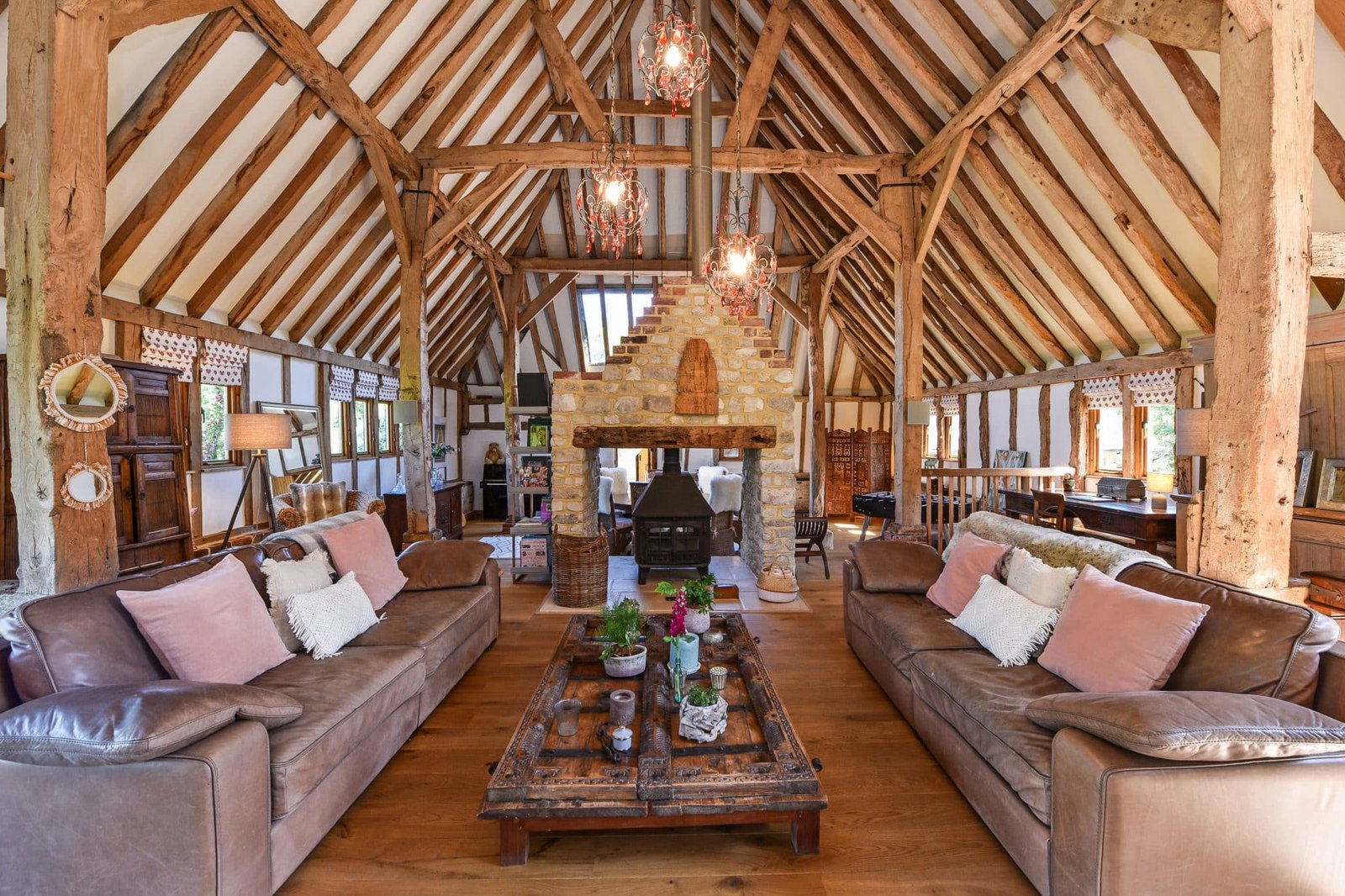
An open-plan living area is essential for barn conversions because it maximises space and accentuates the building’s natural attributes. Removing unnecessary walls to create expansive living areas allows for fluid movement between different zones such as the kitchen, dining, and lounge. The spacious layout not only increases functionality but also creates dramatic impact by revealing original features like exposed beams, high ceilings, and rustic brickwork. The design also benefits from strategic placements of large windows that enhance natural daylight and reduce the reliance on artificial lighting. Such designs often include features like oriented strand board cladding and reclaimed timber accents, which reflect a commitment to sustainable building practices.
Selecting Windows and Doors to Complement Barn Architecture
Modern windows and doors are carefully chosen to harmonise with the barn’s original structure while improving energy efficiency. High-performance glass windows maximize daylight and are designed to provide thermal insulation while retaining the historical look of the barn. Larger, floor-to-ceiling windows can dramatically transform interiors, allowing light to flood in and making spaces feel larger and more connected to the outdoors. Doors with a blend of traditional wood accents and modern, insulated cores not only provide security and functionality but also contribute to the overall design aesthetic. These elements are vital in promoting natural ventilation and maintaining the overall passive house concept, thereby reducing energy costs in the long run.
Integrating Contemporary Kitchen and Bathroom Designs
The heart of any modern home is its kitchen and bathrooms, and in a barn conversion, these areas require innovative design solutions that combine modern comfort with rustic allure. Kitchens may feature sleek, modular cabinetry alongside vintage-inspired fixtures and stone or wood countertops that reference the barn’s historic character. Bathrooms are designed with an emphasis on clean lines and functionality, integrating features such as walk-in showers, underfloor heating, and energy-saving water systems. Materials might include recycled concrete for sinks or sustainable timber for vanities. The blend of old and new ensures that these spaces are highly functional while also reflecting a unique sense of style inherent to converted barns.
Choosing Interior Finishes That Marry Rustic Charm With Modern Style
Interior finishes play a crucial role in defining the character of a converted barn. The use of drywall combined with exposed brick, reclaimed wood, and eco-friendly paint formulations can merge rustic charm and contemporary elegance seamlessly. Floors can be finished with sustainable hardwood or polished concrete, while walls feature a combination of natural stone and modern plaster techniques. This design philosophy places an emphasis on materiality and texture, ensuring that every surface contributes to both the aesthetic and energy efficiency of the building. Designers often include accents like spray foam insulation hidden behind drywall for optimum performance, thus maintaining a sleek look while ensuring sustainability.
Designing Effective Lighting Schemes for Large Barn Interiors
Lighting design is integral in transforming expansive barn spaces into warm, inviting living areas. A well-planned lighting scheme utilises a combination of natural light and energy-efficient LED fixtures to highlight architectural features. Skylights and strategically placed large windows enhance daylight, reducing the need for daylight supplementation during the day. In the evenings, layered lighting including ambient, task, and accent lighting ensures a balanced and flexible environment. The implementation of dimmable LED systems not only provides energy savings but also allows homeowners to create different moods throughout the day—ranging from bright workspaces to a soft, cosy ambiance. The lighting design is harmonised with contemporary interiors, ensuring that the charm of the old barn is not lost in modernity.
Key Takeaways:– Open-plan spaces enhance visibility and fluidity while showcasing original design elements. – Modern windows and insulated doors improve energy efficiency and maintain rustic character. – Contemporary kitchen and bathroom designs balance modern functionality with heritage elements. – Careful selection of interior finishes fuses rustic charm with modern sophistication. – Effective lighting strategies leverage natural light and layered LED systems for ambiance and efficiency.
Adopting Sustainable Methods in Barn Conversion Construction
In today’s eco-conscious era, sustainable building practices have become a cornerstone of modern construction. When converting a barn, adopting green building methods not only protects the environment but also reduces long-term energy costs. This section discusses sustainable techniques such as advanced insulation, renewable energy systems, the use of reclaimed materials, and water conservation strategies. These methods create a property that meets the demands of modern living while remaining true to traditional aesthetics.
